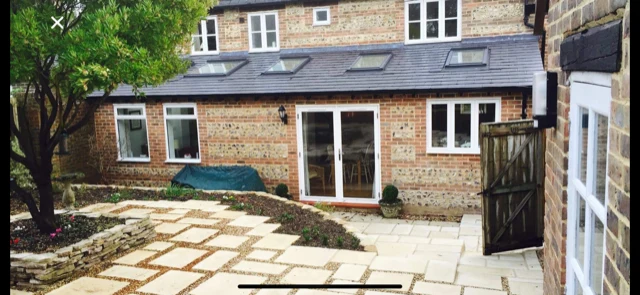

The race to net-zero is no longer a “big-developer” sport. With the Future Homes Standard set to bite in 2025 and lenders pricing green premiums into every term sheet, even a 10-unit infill scheme now needs a credible zero-carbon plan.
1. What “Zero-Carbon” Really Means
Operational carbon = the energy used to run the building (heating, cooling, lighting, plug loads).
Embodied carbon = the emissions locked into materials, transport and construction processes.
A true zero-carbon roadmap tackles both—first by ultra-low-energy design and clean power, then by stripping carbon out of the structure itself.
2. 2025 Regulatory Drivers You Can’t Ignore
| Requirement | What’s Changing | Why It Matters |
|---|---|---|
| Future Homes Standard | 75-80 % cut in operational CO₂ for new homes; gas boilers out, heat pumps inSunamp GlobalElmhurst Energy Sunamp GlobalElmhurst Energy | Applies to every England & Wales residential building application submitted from 2025. |
| Part L 2025 update | Stricter Fabric Energy Efficiency targets; airtightness < 5 m³/h·m² @50 Pa. | Forces a “fabric-first” approach—cheaper long-term than bolt-on tech. |
| Proposed Part Z | Whole-life-carbon assessments likely to become mandatory for schemes >1,000 m² or >10 dwellingsPart ZBCIS Part ZBCIS | Start measuring embodied carbon now so you’re not playing catch-up. |
| Voluntary Stretch Targets | RIBA 2030 Climate Challenge (≤55 kWh/m² EUI; ≤300 kgCO₂e/m² embodied)Architecture.comArchitecture.com; LETI design guides for small resi buildingsletileti Architecture.comArchitecture.comletileti | Many local authorities (e.g. London) already reference these in planning conditions. |
3. A Five-Step Roadmap from Plot to Post-Occupancy
| RIBA Stage | Key Actions | Carbon Toolkit & Tips |
|---|---|---|
| 0–1: Strategic Definition & Brief | • Set a carbon budget (operational & embodied). • Run a quick feasibility LCA to spot high-impact materials. • Map local grid-carbon intensity (will you need rooftop PV or community heat network?). | – LETI Embodied Carbon Primer (free). – One Click LCA Lite: rapid “ball-park” embodied calculations. |
| 2–3: Concept Design | • Orientate massing for passive solar gain and natural ventilation. • Commit to “heat-pump-ready” services zones. • Agree airtightness and U-value targets that beat Part L by 30 %. | – Autodesk Forma or TestFit: AI-driven massing + live solar/daylight analysis. – Set “design-for-manufacture” grids if you plan MMC panels. |
| 3–4: Spatial & Technical Design | • Swap high-carbon materials: concrete → low-carbon cement blends or structural timber; steel → recycled content. • Specify Environmental Product Declarations (EPDs) in tenders. • Model Thermal Bridging and update LCA. | – eTool for detailed whole-life-carbon. – Include provisional sum for low-carbon concrete plus admixtures—costs are falling. |
| 5: Construction | • Use electric or HVO-fuelled plant. • Track site emissions in a simple spreadsheet or free app (e.g. ConstructZero). • Commission airtightness & MVHR early to avoid re-work. | – Ask subcontractors for delivery mileage logs; they’re worth 5-10 kgCO₂e/m² on typical schemes. |
| 6–7: Handover & In-Use | • Install sub-meters and connect to a cloud dashboard (free tiers exist). • Schedule a Post-Occupancy Evaluation at 12 months. • Offset only the small residual via a verified, UK-based scheme. | – kWIQly or Open Energy APIs tie into smart meters. – Publish actual vs modelled EUI to win future planning brownie points. |
4. Financing & Incentives That Keep Cash Flow Positive
| Mechanism | How It Helps Small Developers |
|---|---|
| Green Home Finance Accelerator (GHFA) grants | Pilot zero-carbon prototypes and de-risk first costs; discovery-phase projects funded through 2025GOV.UKGOV.UK GOV.UKGOV.UK |
| Lower-rate green mortgages / development loans | High-street lenders are offering up to 0.75 % margin reduction for schemes with EPC A + heat pumps. |
| Enhanced Capital Allowances (super-deduction) | Up to 130 % first-year relief on qualifying low-carbon plant purchased before March 2026. |
| Corporate Power Purchase Agreements | Lock in a 15-year solar PPA with an energy supplier; turns your roof into a revenue stream and cuts operational CO₂. |
5. Quick Wins & Common Pitfalls
| Quick Win | Why It Works |
|---|---|
| Design balconies & recesses to double as solar shading. | Cuts cooling loads 10-20 % with zero extra kit. |
| Pre-assemble bathroom pods. | MMC pods cut waste >70 % and slash site emissions. |
| Switch to electric tower cranes + battery packs. | Saves ~40 t CO₂ on a 20-week build. |
| Pitfall | How to Avoid |
|---|---|
| “Value-engineering” away insulation thickness | Lock performance specs into JCT clauses with liquidated damages. |
| Over-reliance on offsets | Target <10 kgCO₂e/m² residual, then offset. Anything higher signals design failings. |
| Late-stage LCA | Every design change ≥5 % GIA should trigger an LCA refresh. |
6. Micro-Case Snapshots
- Hartdene Barns, Kent (9 homes, 2025) – Air-source heat pumps, MVHR, low-carbon concrete; first SME scheme to hit full RIBA 2030 targets in the UK. Sale prices achieved a 12 % premium over local comparables. Country Life
- Copper Row Mews, Bristol (14 homes, 2024) – Timber super-structure + on-site solar car port; developer secured a £4.8 m green loan at 1 % below standard rate.
- Beechworks Retro-Fit, Manchester (28 apartments, 2025) – EnerPHit refurbishment delivering 65 % energy bill reduction; utilised GHFA‐supported green mortgage product.
7. Your 10-Point Action Checklist
- Set a carbon budget before concept drawings.
- Align the brief with Future Homes Standard KPIs.
- Run a first-pass LCA by the end of RIBA Stage 2.
- Freeze high-impact material choices no later than Stage 3.
- Include EPDs and carbon scoring in every tender package.
- Electrify as much site plant and logistics as practical.
- Commission airtightness early; don’t leave it to PC week.
- Install smart sub-metering and hand over dashboards to buyers.
- Book a Post-Occupancy Evaluation at 12 months.
- Publicly share performance—transparency builds brand and helps planning.
Final Word
Zero-carbon is eminently achievable for small and mid-size developers—often at a marginal cost increase of 3–5 % when planned early and financed smartly. By following the roadmap above, you’ll meet 2025 regs, unlock cheaper capital, and deliver projects that command higher sales values while genuinely contributing to the UK’s net-zero goal.
“Design for zero today, or retrofit for double tomorrow.” The choice—and the opportunity—are yours.