Architecture is more than just buildings and blueprints; it’s a tool that shapes lives, fosters connections, and nurtures well-being. Thoughtful design can profoundly impact communities, creating environments that promote health, happiness, and inclusivity. At N.A. Williams Building Consultancy, we believe in designing with purpose, ensuring that architecture enhances community well-being.
The Role of Architecture in Community Well-Being
Architecture has a direct influence on physical, mental, and social health. Well-designed spaces encourage community engagement, reduce stress, and promote a sense of belonging. From urban planning to individual buildings, architecture sets the stage for how people interact with their environment and each other.
Key Principles for Enhancing Community Well-Being Through Architecture
1. Inclusive Design for Accessibility
Creating spaces that cater to all abilities ensures that everyone can participate in and benefit from the community. Key considerations include:
- Step-free access: Essential for those with mobility challenges.
- Clear signage: Helps visually impaired individuals navigate spaces with ease.
- Multi-sensory design: Incorporating textures, sounds, and visual cues for inclusivity.
Example: Designing a community centre with ramps, tactile flooring, and wide doorways ensures accessibility for wheelchair users, parents with pushchairs, and elderly individuals.
2. Promoting Physical and Mental Health
Architecture can actively support healthier lifestyles by encouraging movement, relaxation, and mindfulness:
- Green spaces: Parks, gardens, and rooftop terraces provide opportunities for exercise and relaxation.
- Walkable neighbourhoods: Compact layouts with pedestrian pathways reduce reliance on cars, promoting physical activity.
- Natural light and ventilation: Maximising daylight and airflow improves indoor air quality and reduces stress.
Example: Incorporating biophilic design elements, such as indoor plants and large windows, creates environments that reduce anxiety and enhance productivity.
3. Fostering Social Interaction
Spaces that encourage connection and collaboration strengthen communities:
- Shared spaces: Community centres, libraries, and open plazas provide venues for social activities.
- Flexible designs: Adaptable spaces that accommodate events, markets, and gatherings.
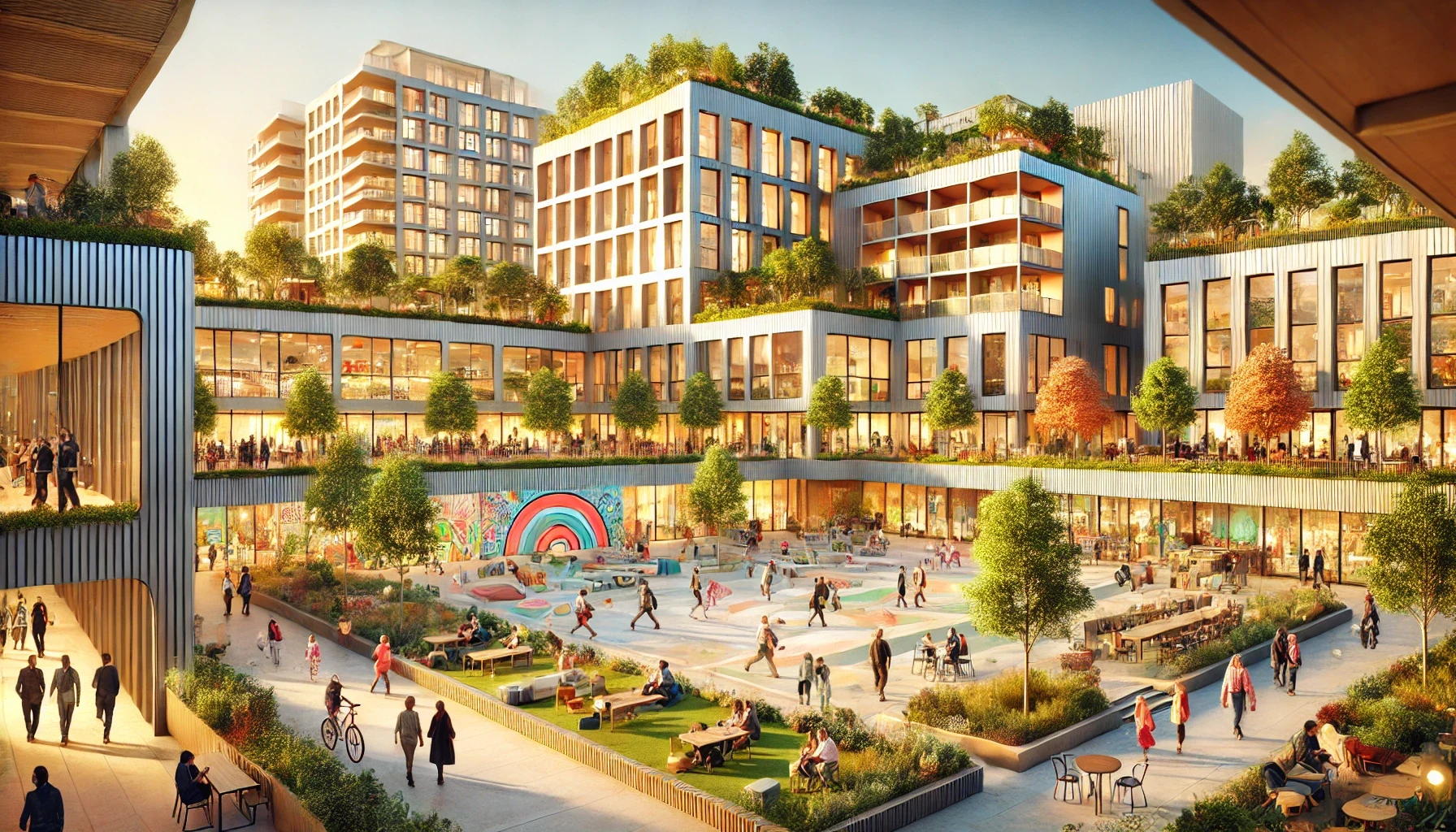
- Mixed-use developments: Integrating residential, commercial, and recreational areas fosters a sense of community.
Example: A town square with seating areas, cafes, and performance spaces becomes a hub for cultural exchange and social interaction.
4. Sustainable and Eco-Friendly Design
Environmentally conscious architecture not only benefits the planet but also improves community well-being:
- Renewable energy sources: Solar panels and wind turbines reduce reliance on fossil fuels.
- Green roofs and walls: Improve insulation, reduce urban heat, and enhance biodiversity.
- Water management systems: Rain gardens and permeable pavements minimise flooding and support sustainability.
Example: Designing an eco-village with energy-efficient homes, shared gardens, and sustainable transport options reduces environmental impact while promoting communal living.
5. Designing for Safety and Security
Safety is a cornerstone of community well-being. Thoughtful design reduces risks and fosters a sense of security:
- Well-lit public spaces: Deters crime and enhances visibility.
- Traffic calming measures: Pedestrian crossings and speed bumps ensure safer streets.
- Natural surveillance: Strategic placement of windows and open areas increases visibility, discouraging anti-social behaviour.
Example: A housing development with clear sightlines, well-lit pathways, and communal play areas promotes a safe and welcoming environment.
Real-World Examples of Purposeful Design
- The Eden Project, Cornwall, UK
This innovative ecological park combines education, sustainability, and community engagement. Its biodomes and landscaped gardens offer visitors a chance to connect with nature while learning about environmental conservation. - BedZED, London, UK
The Beddington Zero Energy Development is a sustainable housing community designed to reduce carbon emissions. Its energy-efficient homes, shared spaces, and focus on walkability foster both environmental and social well-being. - Maggie’s Centres, UK
These cancer support centres are designed with care and sensitivity, providing serene and uplifting environments that promote healing and comfort.
The Role of N.A. Williams Building Consultancy
At N.A. Williams Building Consultancy, we specialise in designing spaces that prioritise community well-being. From residential projects to public infrastructure, our approach integrates:
- Collaborative planning: Engaging with stakeholders to ensure designs meet community needs.
- Sustainable solutions: Minimising environmental impact through innovative practices.
- Bespoke designs: Tailoring spaces to enhance functionality and inclusivity.
We are passionate about creating environments that uplift and unite communities, leaving a lasting positive impact.
Building a Better Future Through Purposeful Design
Architecture has the power to transform lives. By designing with purpose, we can create spaces that promote health, happiness, and connection. Whether it’s a community park, a sustainable housing project, or a multifunctional public space, thoughtful architecture enhances the well-being of individuals and the wider community.
At N.A. Williams Building Consultancy, we are committed to making every project a step toward a better, more inclusive future. Let’s work together to build spaces that inspire, connect, and enrich lives.