The changing climate poses unprecedented challenges for homeowners, builders, and communities worldwide. Rising temperatures, unpredictable weather patterns, and increased risks of flooding and storms demand innovative construction approaches to ensure homes remain resilient and sustainable. At N.A. Williams Building Consultancy, we are committed to helping clients adapt their properties to meet the demands of an evolving environment.
The Impact of Climate Change on Homes
Homes are increasingly vulnerable to the effects of climate change. Flooding from heavy rainfall, overheating during heatwaves, and storm damage are becoming more common. These challenges not only threaten the structural integrity of buildings but also impact the health and comfort of occupants.
Traditional construction methods often fall short in addressing these risks, making it imperative to adopt forward-thinking solutions. By integrating climate-resilient design principles, homes can withstand environmental stresses while reducing their carbon footprint.
Innovative Approaches to Climate-Adapted Construction
Modern construction practices are evolving to ensure homes can adapt to climate challenges. Below are some key strategies:
1. Climate-Resilient Materials
The use of materials designed to withstand extreme weather conditions is critical for climate-adapted homes. Examples include:
- Flood-resistant materials: Concrete blocks, water-resistant insulation, and ceramic tiles help minimise damage during flooding.
- Durable roofing solutions: Metal roofing and impact-resistant shingles provide protection against high winds and hail.
- Heat-reflective coatings: Applied to walls and roofs, these coatings help maintain comfortable indoor temperatures during heatwaves.
2. Passive Cooling and Heating
With rising energy costs and increasing temperatures, passive design features are essential:
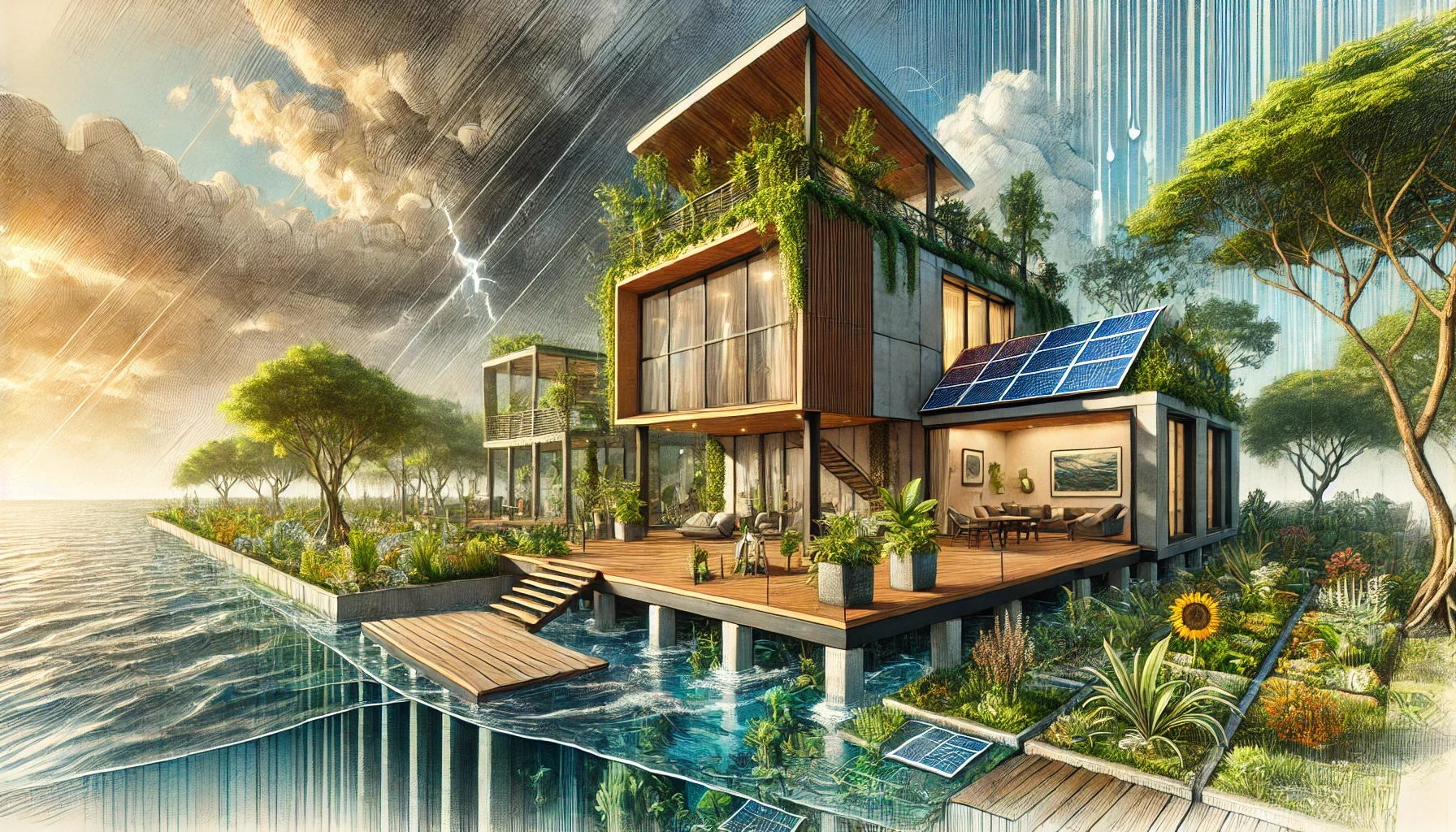
- Green roofs and walls: Vegetation reduces heat absorption, improves insulation, and promotes biodiversity.
- Cross-ventilation: Strategic placement of windows and vents ensures a natural flow of air, reducing reliance on air conditioning.
- Thermal mass materials: Concrete, brick, and stone absorb heat during the day and release it at night, stabilising indoor temperatures.
3. Flood Mitigation Designs
Flooding is a significant concern in the UK, and homes must be prepared to handle excess water. Key approaches include:
- Elevated foundations: Raising homes above potential flood levels protects against water ingress.
- Permeable paving: Driveways and pathways made from permeable materials reduce surface runoff.
- Flood barriers and drainage systems: Installing smart drainage solutions and barriers can safeguard homes during heavy rainfall.
4. Energy Efficiency and Sustainability
Sustainable design reduces the environmental impact of homes and ensures they remain affordable to maintain:
- Solar panels: Harnessing renewable energy reduces dependence on fossil fuels.
- Triple glazing: High-performance windows provide superior insulation, cutting energy costs and reducing emissions.
- Smart home technology: Automated systems monitor energy use, adapt to weather conditions, and enhance efficiency.
5. Fire-Resistant Construction
In areas at risk of wildfires, fire-resistant construction methods are becoming increasingly important:
- Non-combustible cladding: Materials like fibre cement boards protect homes from external fire risks.
- Fire-resistant landscaping: Creating defensible spaces around properties with fire-resistant plants can minimise exposure to wildfires.
Innovative Examples in Climate-Adaptive Construction
- Floating Homes
Designed to rise with water levels, floating homes are an effective solution for flood-prone areas. These structures are anchored to a base but adapt to fluctuating water levels. - Cool Roofs
Utilising reflective materials, cool roofs reduce heat absorption, making them ideal for homes in regions experiencing rising temperatures. - Underground and Earth-Sheltered Homes
Built into the landscape, these homes take advantage of the earth’s natural insulation to regulate temperatures and protect against storms.
The Role of N.A. Williams Building Consultancy
At N.A. Williams Building Consultancy, we combine expertise and innovation to help clients adapt their homes for a changing climate. Our services include:
- Bespoke assessments: Tailored solutions to address unique climate risks in your area.
- Sustainable construction practices: Incorporating green building techniques to enhance resilience and efficiency.
- Regulatory compliance: Ensuring all designs meet UK building codes and environmental standards.
Whether you are building a new home or retrofitting an existing property, our team can guide you through every stage of the process.
Building for Tomorrow
Adapting homes for a changing climate is no longer optional; it is a necessity for sustainable and resilient living. By embracing innovative construction approaches, homeowners can safeguard their properties while contributing to a greener future.
N.A. Williams Building Consultancy is proud to be at the forefront of climate-adaptive construction, offering solutions that protect homes, enhance comfort, and reduce environmental impact. Together, we can build a future that is prepared to weather any storm.