In an era where urban areas are becoming increasingly crowded and space is at a premium, modular construction offers an innovative solution to the challenges of urban living. By maximising efficiency and minimising waste, modular construction enables cities to adapt to growing populations while maintaining liveable environments. At N.A. Williams Building Consultancy, we explore how modular construction is transforming urban landscapes and redefining how we use space.
The Concept of Modular Construction
Modular construction involves creating building components—known as modules—in a factory-controlled environment before assembling them on-site. These modules are pre-fabricated to precise specifications, ensuring consistent quality and faster construction timelines. This approach is particularly suited to urban areas where space, time, and resources are limited.
Key Benefits of Modular Construction for Urban Living
1. Maximising Space Efficiency
- Compact Designs: Modular units can be tailored to fit tight urban spaces, making them ideal for city centres where land is scarce.
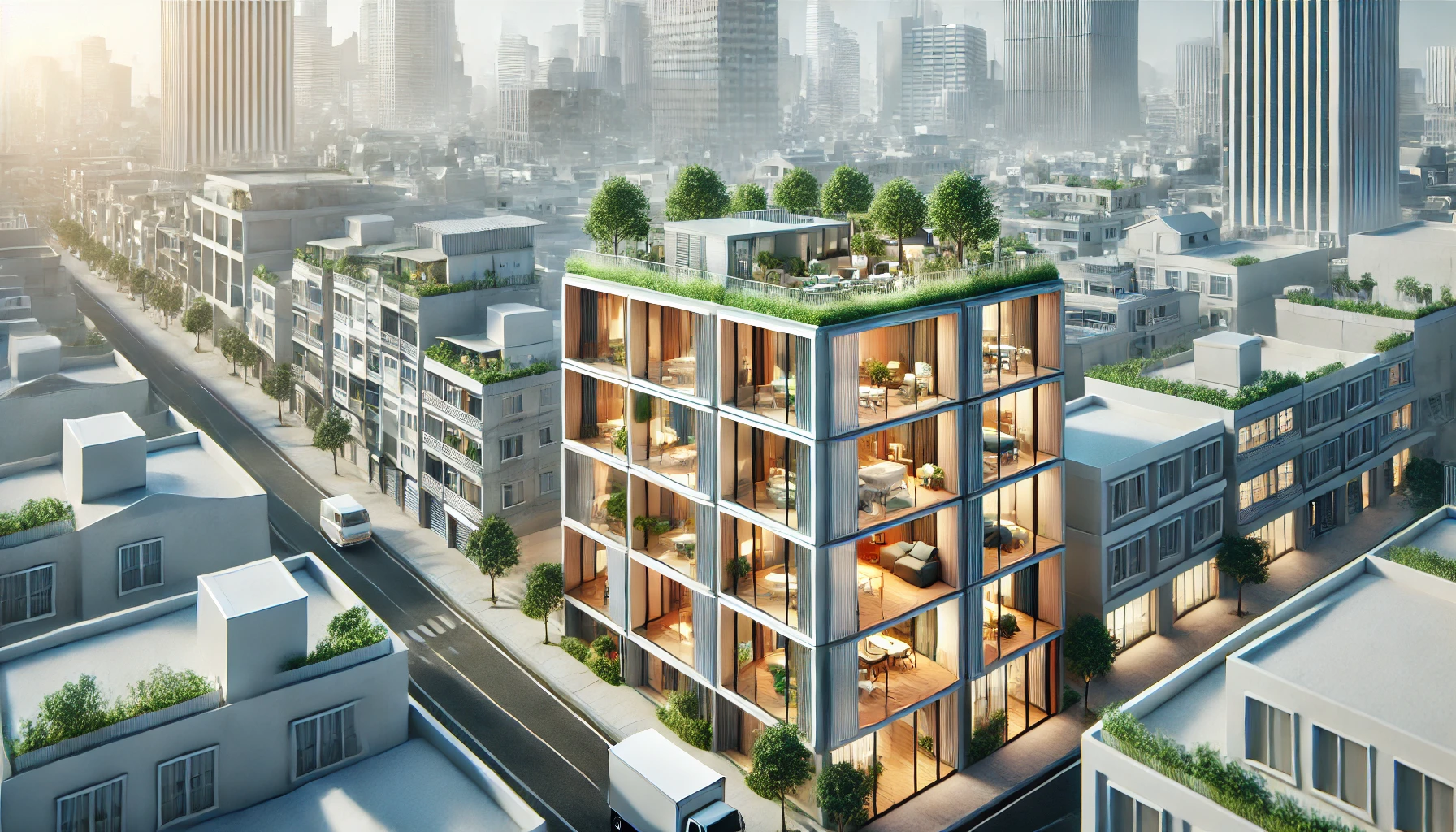
- Vertical Construction: Modules can be stacked to create multi-storey structures, effectively using vertical space to accommodate more residents or businesses.
- Customisation: Modular construction allows for bespoke designs that optimise floor plans, ensuring no space is wasted.
Example: Micro-apartments designed with modular construction often include multi-functional furniture and hidden storage, maximising utility within a smaller footprint.
2. Speed of Construction
- Rapid Assembly: Since modules are built off-site, they can be assembled quickly once delivered, significantly reducing disruption in busy urban areas.
- Parallel Processes: On-site groundwork and off-site module fabrication can occur simultaneously, accelerating project timelines.
- Minimal On-Site Disruption: Modular projects reduce the impact on surrounding communities, making them ideal for densely populated areas.
Example: The installation of modular student housing near universities often takes just a few weeks, reducing noise and traffic in nearby neighbourhoods.
3. Sustainability and Reduced Waste
- Precise Manufacturing: Factory-controlled settings minimise material waste, making modular construction a sustainable choice.
- Recyclable Components: Many modular units are designed to be disassembled and reused, reducing the environmental impact of demolition.
- Energy Efficiency: Prefabricated modules can include energy-saving features, such as solar panels and advanced insulation, ensuring long-term sustainability.
Example: Modular eco-villages combine energy-efficient designs with compact layouts, reducing the carbon footprint of urban living.
4. Adaptability and Flexibility
- Expandable Designs: Modular buildings can be expanded or reduced as needs change, offering flexibility in dynamic urban environments.
- Relocatable Structures: Modular units can be dismantled and relocated, providing adaptable solutions for temporary or evolving requirements.
- Mixed-Use Developments: Combining residential, commercial, and recreational spaces within a single modular structure supports efficient land use.
Example: Temporary modular offices in urban regeneration projects provide workspace for developers while long-term construction is underway.
5. Affordability and Accessibility
- Cost-Effective Solutions: Modular construction typically reduces labour and material costs, making housing and commercial spaces more affordable.
- Improved Accessibility: Modular designs can incorporate universal access features, ensuring inclusivity for people with disabilities or mobility challenges.
Example: Affordable modular housing initiatives provide high-quality living spaces at lower costs, addressing the housing crisis in urban areas.
Applications of Modular Construction in Urban Settings
- Residential Developments
- Modular homes offer efficient and stylish living solutions, ideal for families, singles, and students in urban areas.
- Compact layouts maximise interior space without compromising comfort or functionality.
- Commercial Spaces
- Office buildings, retail shops, and restaurants can be rapidly constructed using modular techniques, ensuring businesses can open quickly.
- Custom designs cater to specific commercial needs, such as co-working spaces or boutique stores.
- Public Infrastructure
- Schools, hospitals, and community centres benefit from modular construction’s speed and cost-effectiveness, providing essential services in high-demand areas.
- Temporary shelters or emergency housing can be deployed quickly in response to crises.
- Urban Regeneration Projects
- Modular construction supports revitalisation efforts by providing adaptable solutions for changing urban landscapes.
- Mixed-use modular buildings integrate housing, retail, and green spaces, promoting sustainable urban living.
Case Studies: Modular Construction in Action
- Wolverhampton Interchange, UK
This modular student housing project demonstrates how vertical modular construction can efficiently provide high-quality accommodation in city centres. - London’s Pop Brixton
Using modular construction, this community hub includes retail spaces, food outlets, and shared workspaces, revitalising unused land while fostering community engagement. - Y:Cube Housing, Mitcham, UK
Designed for single occupancy, these modular homes provide affordable and sustainable housing for those transitioning from temporary shelters.
The Role of N.A. Williams Building Consultancy in Modular Construction
At N.A. Williams Building Consultancy, we specialise in integrating modular construction into urban planning and design. Our services include:
- Tailored Solutions: Creating bespoke modular designs to suit diverse needs, from housing to commercial spaces.
- Sustainability Focus: Incorporating eco-friendly materials and energy-efficient systems into every project.
- Comprehensive Support: Managing every stage of the process, from concept to completion, ensuring seamless execution.
Conclusion: Embracing Modular Construction for Urban Growth
Modular construction offers a transformative approach to urban living, addressing space constraints, affordability, and sustainability. By prioritising efficient design and adaptable solutions, modular buildings enable cities to grow without compromising quality of life.
At N.A. Williams Building Consultancy, we are committed to leveraging modular construction to create smarter, greener, and more liveable urban spaces. Let us help you turn your vision into reality, one module at a time.