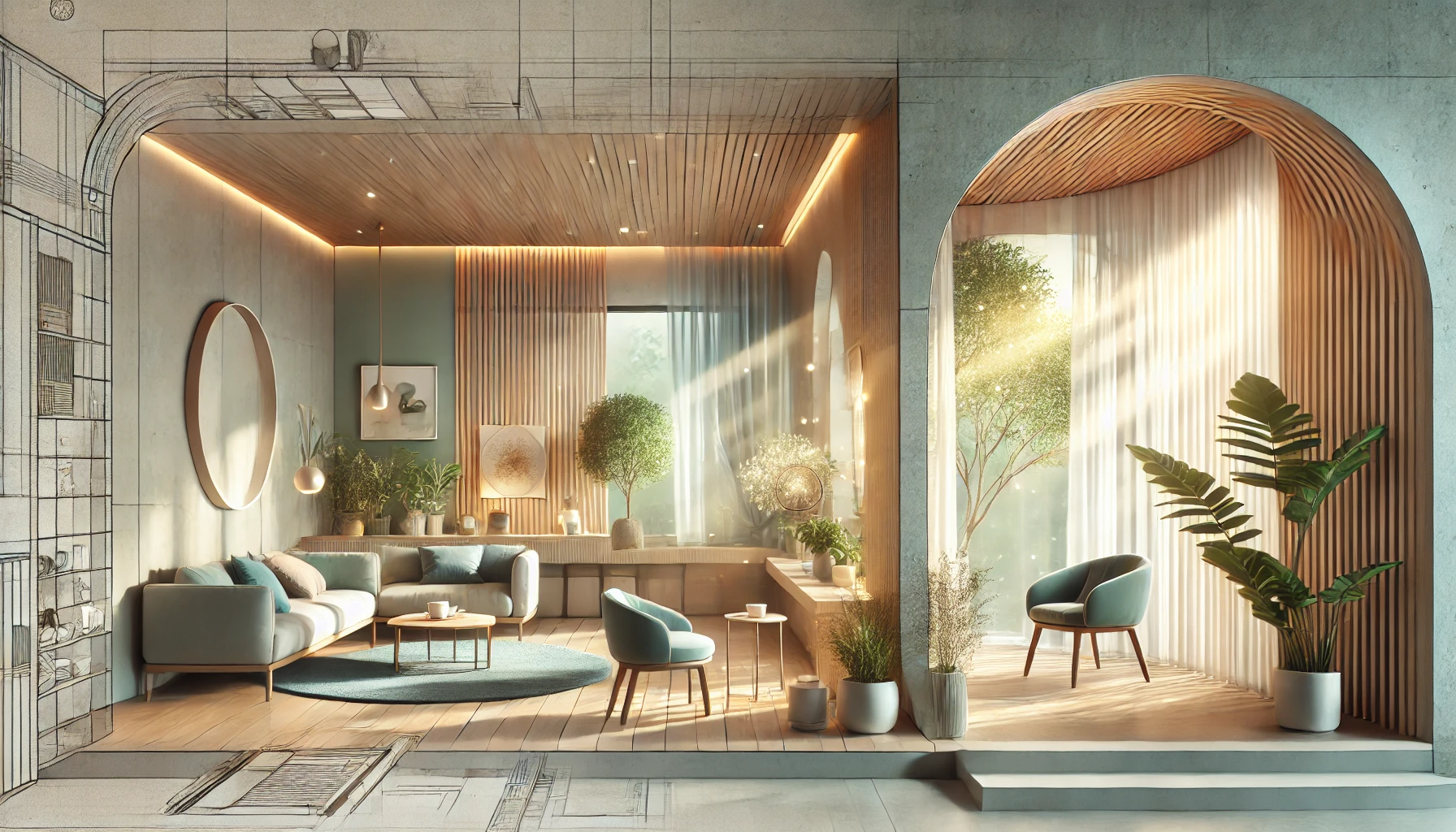
Our homes are more than just places to live; they are sanctuaries where we recharge, connect, and find balance. With increasing awareness of mental health, architectural design is evolving to create spaces that nurture emotional well-being and enhance productivity. From maximising natural light to fostering a sense of calm through thoughtful layouts, design choices can significantly impact how we feel and function in our homes.
1. The Science of Space and Mental Health
Research shows that our environment has a profound effect on our mental health. Poorly designed spaces can contribute to stress, anxiety, and even depression, while carefully planned layouts can promote relaxation and productivity.
Key Psychological Principles in Design:
- Biophilic Design: Incorporating natural elements, such as greenery, natural materials, and water features, connects occupants with nature, reducing stress and improving focus.
- Flow and Circulation: Open layouts with clear paths encourage movement and reduce feelings of confinement.
- Colour Psychology: Calming colours like blues, greens, and neutrals can evoke a sense of peace, while brighter hues like yellows and oranges inspire energy and creativity.
2. Maximising Natural Light for Well-Being
Natural light plays a vital role in regulating mood and energy levels. Exposure to daylight boosts serotonin production, improving mental health and overall happiness.
Design Tips for Enhancing Natural Light:
- Large Windows and Skylights: Allow sunlight to flood key living areas.
- Open Layouts: Reduce barriers like unnecessary walls to let light travel through the home.
- Mirrors and Reflective Surfaces: Strategically placed mirrors can amplify natural light, brightening darker spaces.
A study by the University of California found that individuals exposed to more daylight experienced better sleep, higher productivity, and improved emotional well-being.
3. Creating Calming Spaces Through Layouts
A well-thought-out layout can help create a sense of calm and control, reducing feelings of overwhelm and disorganisation.
Features of Calming Home Layouts:
- Defined Zones: Separate spaces for work, relaxation, and socialising can reduce mental clutter and help maintain focus.
- Clutter-Free Design: Built-in storage and minimalist interiors prevent overstimulation.
- Private Retreats: Bedrooms, reading nooks, or meditation corners allow for quiet reflection.
Example: A home office tucked away from noisy communal spaces can enhance focus and reduce distractions, supporting mental clarity during work.
4. Incorporating Greenery for Emotional Balance
Plants are more than decorative elements—they improve air quality, boost mood, and create a connection to nature.
How to Use Greenery in Design:
- Add potted plants to desks, countertops, and shelves.
- Designate a “green wall” or vertical garden in living areas.
- Include outdoor spaces like balconies or patios with ample planting.
Studies have shown that even a single plant in a room can reduce stress and increase productivity, making greenery an essential part of mental health-conscious design.
5. The Role of Sound and Acoustics
Noise pollution can significantly impact mental health, leading to stress, poor concentration, and sleep disturbances. Thoughtful design can minimise unwanted sounds while enhancing pleasant acoustics.
Acoustic Design Tips:
- Use soft furnishings like rugs, curtains, and cushions to absorb sound.
- Incorporate soundproofing materials in walls and ceilings.
- Design quiet zones away from external noise sources like busy roads.
Additionally, integrating soothing soundscapes—such as water features or speakers playing nature sounds—can create a tranquil atmosphere.
6. Personalising Spaces for Emotional Comfort
Personal touches in a home can foster a sense of belonging and security, which are critical for mental well-being.
Ways to Add Personal Comfort:
- Display meaningful objects like photos, artwork, or souvenirs.
- Choose furniture and décor that reflect your personality and preferences.
- Design flexible spaces that can evolve with your needs, ensuring they remain functional and comforting.
Example: A gallery wall in a living room with family photos and art pieces can evoke positive memories and reinforce a sense of identity.
Fostering Mental Health Through Thoughtful Design
Designing for mental health isn’t just a trend; it’s a vital aspect of creating spaces that support our emotional and psychological needs. By prioritising natural light, incorporating greenery, reducing noise, and crafting calming layouts, we can transform homes into sanctuaries that promote well-being and productivity.
In a world that often feels chaotic, our homes should be a place of peace and balance—a true reflection of the life we wish to cultivate. Start with small changes today, and see how thoughtful design can transform not just your home, but your mental health as well.